Menu printing is the visual calling card of a restaurant brand. A premium menu not only makes dishes look more appetizing but also elevates the overall dining experience and brand image. This article systematically breaks down menu printing across 6 dimensions: material, size, waterproofing, printing process, design tips, and decision framework.
1. Menu Material Selection
| Material | Features | Best For |
|---|---|---|
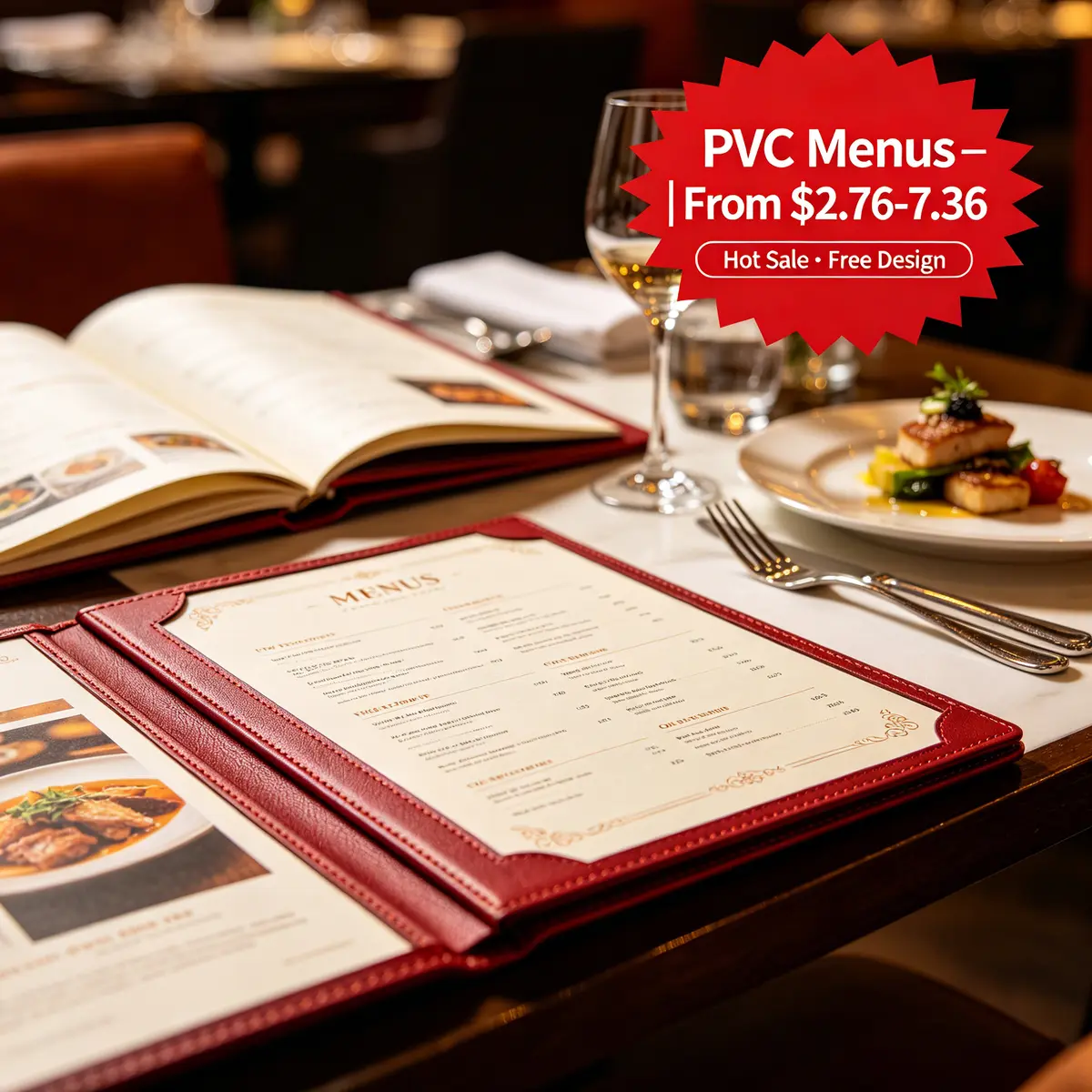
| PVC Menu | Waterproof, oil-proof, wipeable | Hotpot, cha chaan teng, seafood |
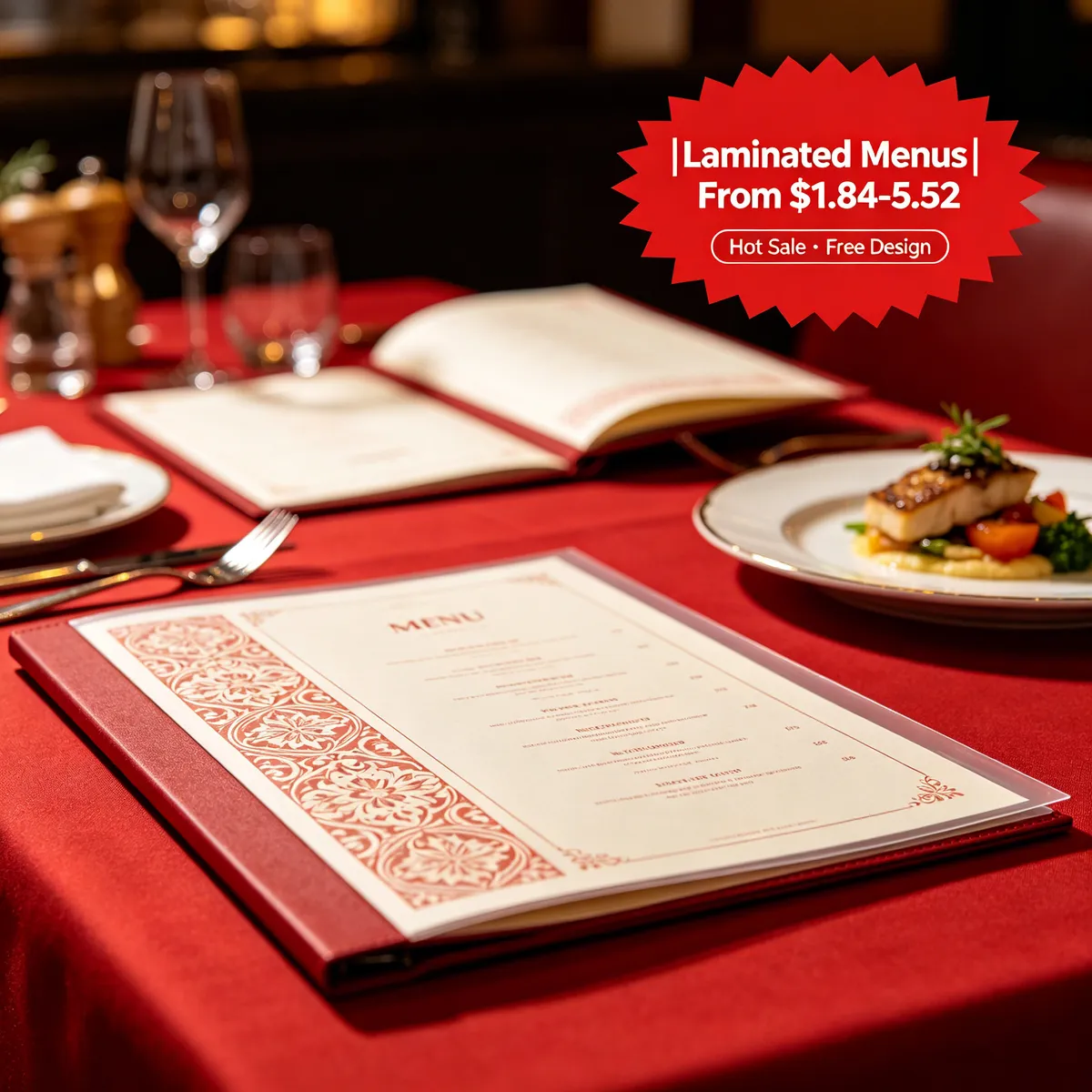
| Laminated Menu | Waterproof, durable, affordable | Fast food, casual dining, coffee shop |
| Plastic Sleeve | Replaceable inner pages, economical | Restaurants with frequent menu changes |
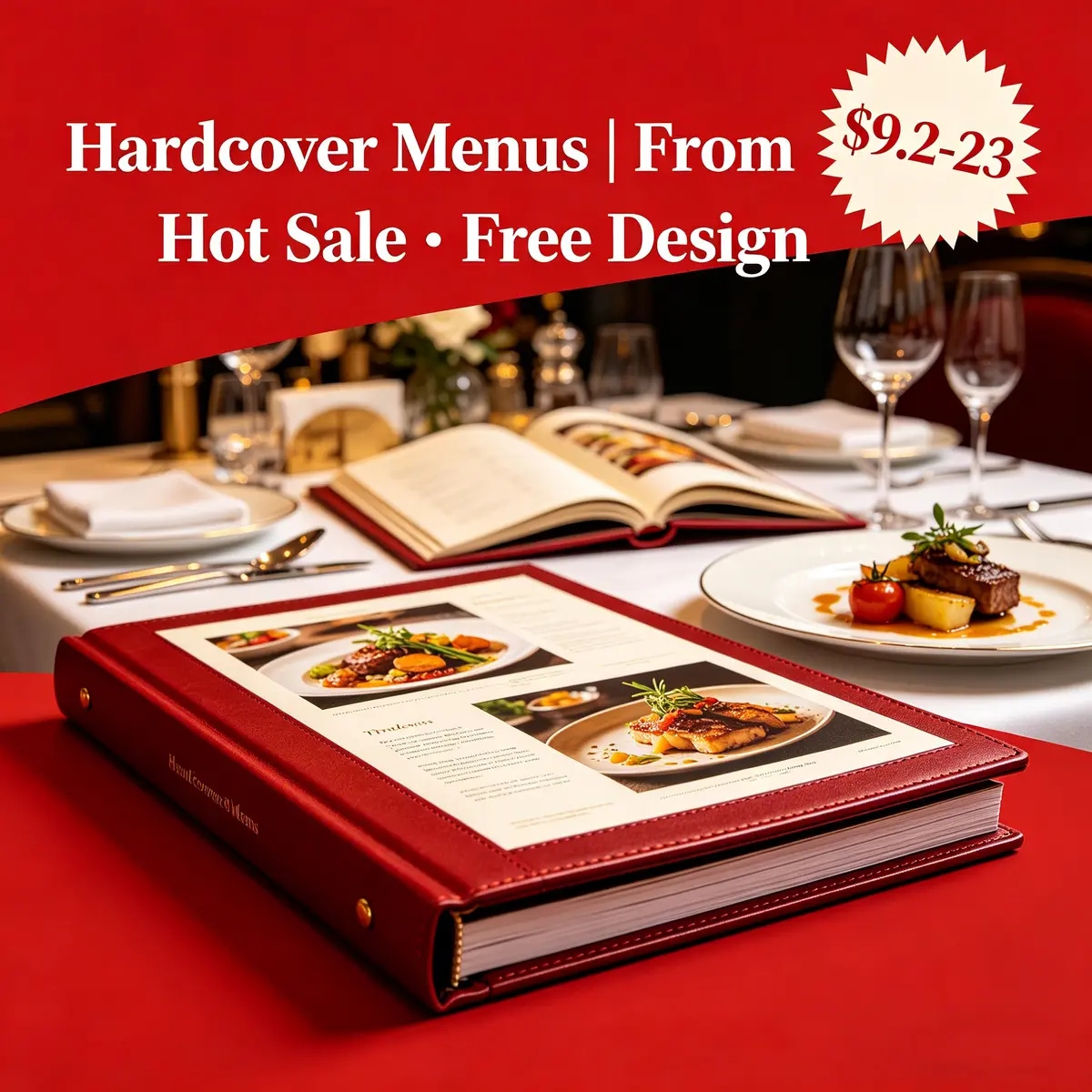
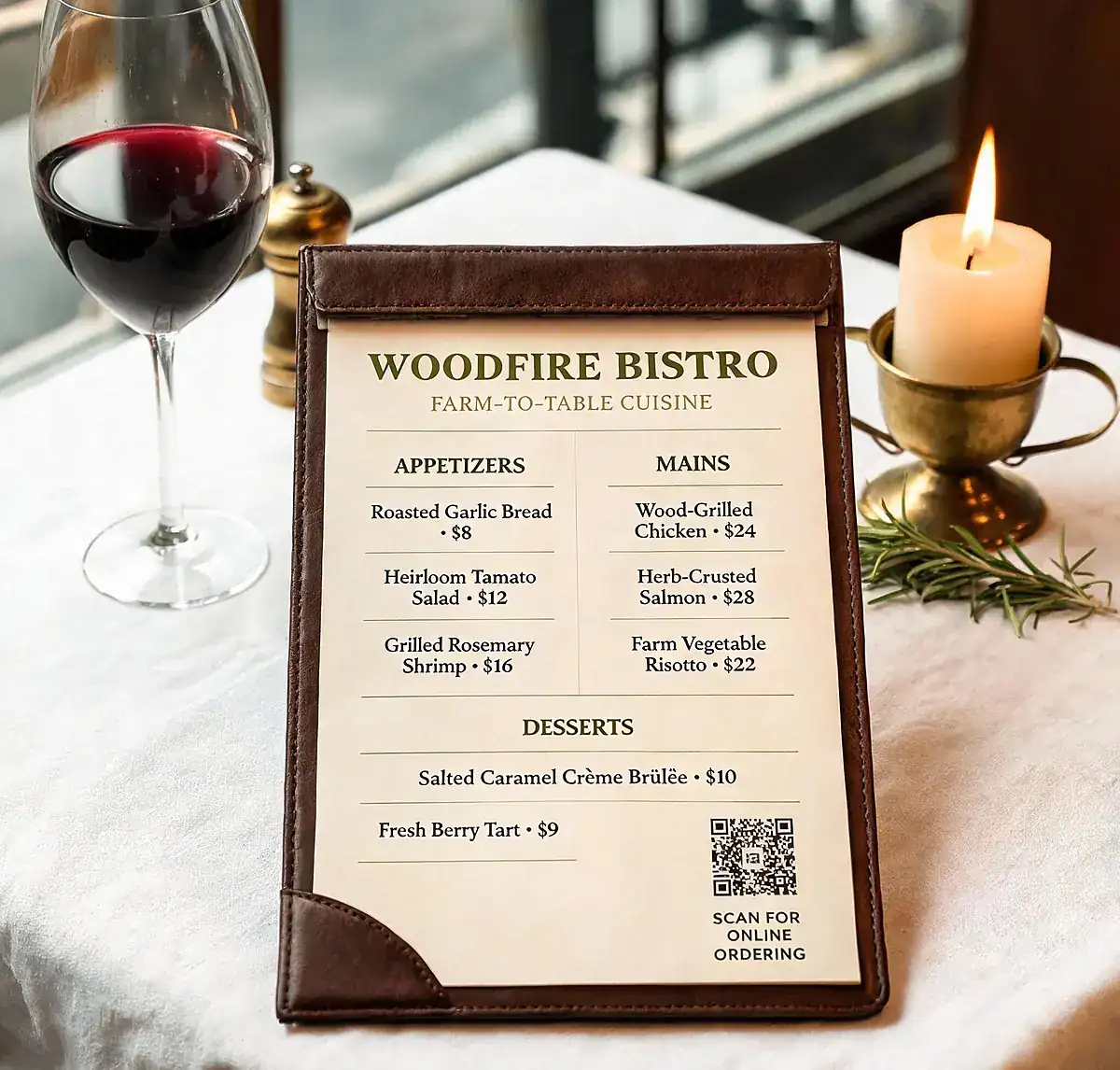
| Leather Menu | Premium, fine texture | High-end restaurants, hotels, clubs |
| Laminated Art Paper | Vibrant, traditional | Western dining, coffee, light meals |
| Velvet-Laminated | Ultimate premium, soft tactile | Michelin, private kitchen |
2. Menu Sizes
- A4 (210 × 297mm): Most common, Western menu
- A5 (148 × 210mm): Light meals, coffee, set meals
- A3 (297 × 420mm): Hotpot, large restaurant menus
- Tri-fold (DL): Easy to place at table
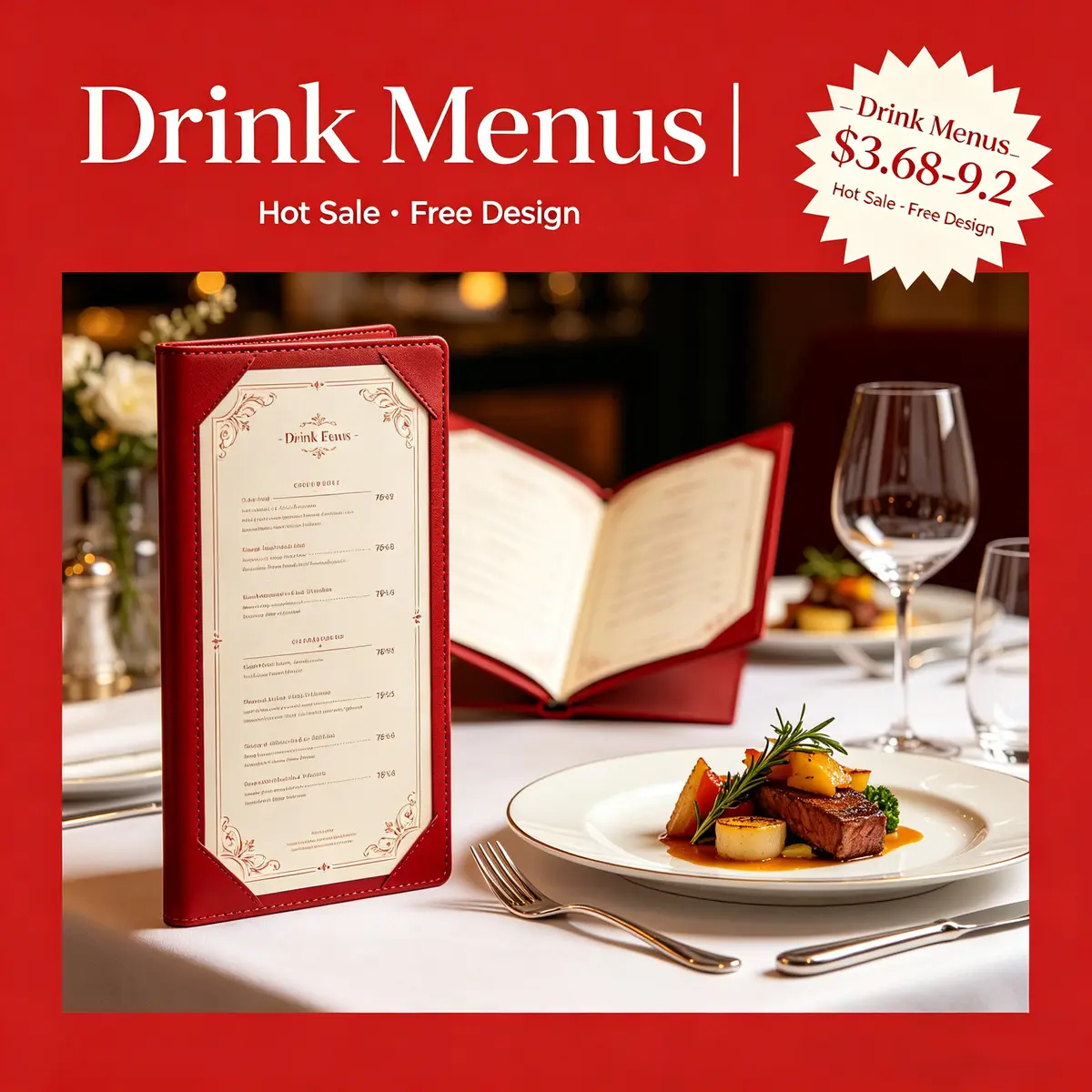
- Double-sided: Menu + drinks/desserts
- Multi-page Booklet: Appetizers/mains/desserts
3. Waterproofing Methods
- Double-sided Lamination: Most economical waterproof, wipeable
- Single-side Matte / Glossy Lamination: Basic protection
- PVC Full Wrap: Rounded corners, abrasion-resistant
- PVC Outer + Replaceable Inner: Inner regular paper, outer waterproof durable
- Waterproof Art Paper: Inner directly waterproof, higher cost
- Holographic Lamination: Premium visuals
4. Printing Processes
| Process | Features | Best For |
|---|---|---|
| 4-color (CMYK) | Rich colors, photo-level | Dish photo display |
| Spot Color (Pantone) | Brand standard color accurate | Unified brand logo |
| Spot UV | Local glossy on dish photo | Highlight featured dishes |
| Foil Stamping (Gold/Silver) | Premium, brand upgrade | High-end restaurants |
| Rounded Corners | Soft tactile, anti-wear | All menus |
| Hole Punch / Loose-leaf | Replaceable | Multi-page menus |
5. Design Tips
- Food Photography: Natural light, color temp 5000-6000K
- Font Hierarchy: Dish name large, price medium, description small
- Category Logic: Clear appetizer / main / dessert sections
- QR Code: E-menu, reservation link
- Brand Consistency: Logo + standard colors + fonts aligned
- Language Versions: Bilingual, traditional/simplified, multilingual
6. Frequently Asked Questions
Q:What is the MOQ for menus?
A:100 pieces; PVC menu can be single-piece custom.
Q:Are PVC menus durable?
A:Quality PVC menu lasts 2-3 years, waterproof and oil-proof wipeable.
Q:What files are needed?
A:PDF (outlined) + 300dpi images + CMYK.
Q:Can the menu include QR code for e-menu?
A:Yes, ZprintPro can directly print QR codes.
Want more on menu printing? Contact ZprintPro via WhatsApp for a quote!